
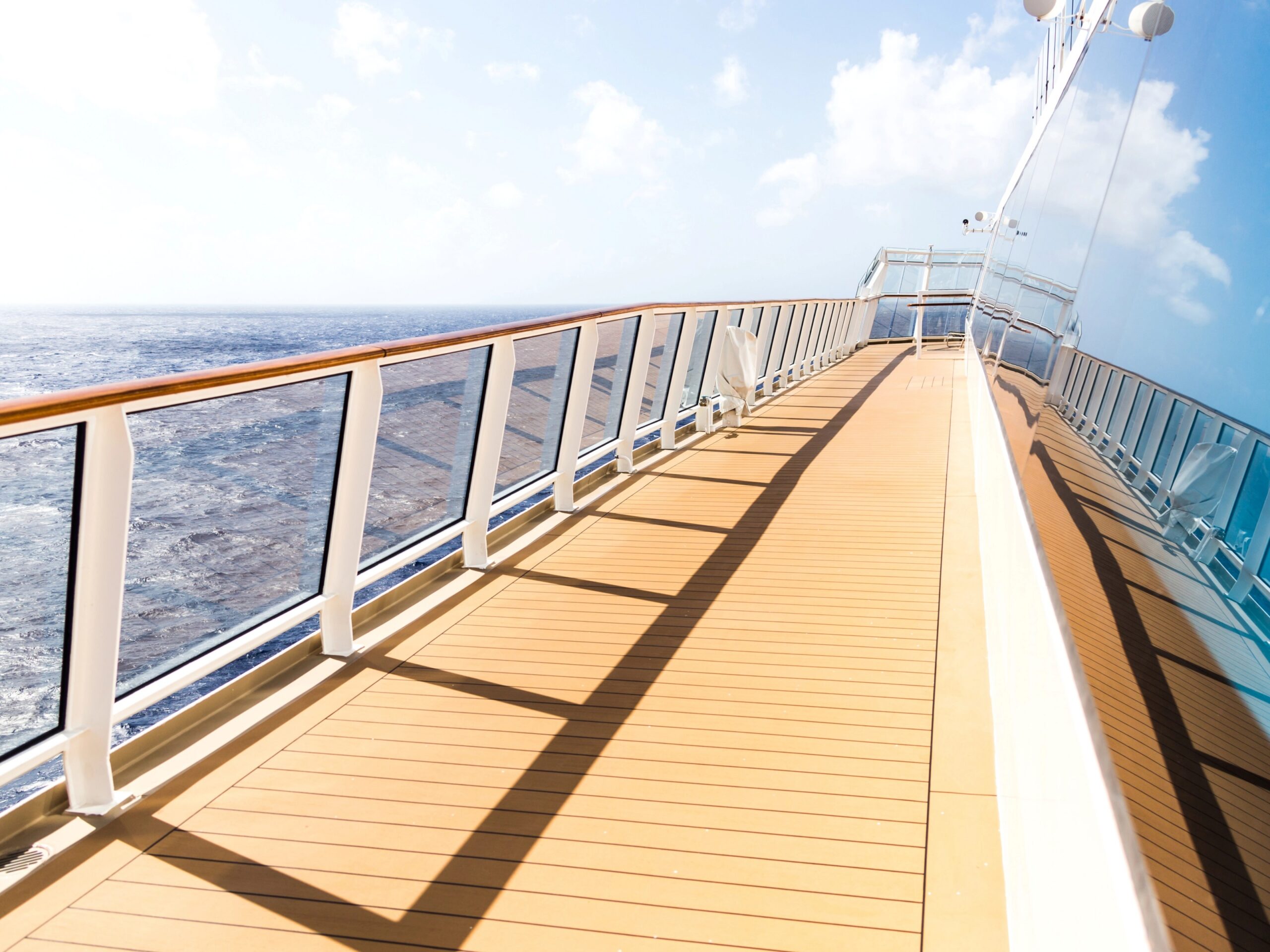
When it comes to decking solutions for boats, yachts, catamarans, and even pontoons 🚤⛵️, the conversation almost always drifts toward teak wood. And yes, let’s be honest — teak has earned its legendary status 🌳. However, if we take a breath, step back, and look at the situation soberly, things are not quite so one-sided anymore.
In recent years, marine vinyl flooring has confidently entered the scene, offering a practical, visually convincing, and — let’s not be afraid of the word — sensible alternative. And here the question arises: are vinyl deck coverings really capable of replacing teak, or is this just a beautiful marketing picture? 🤔 Let’s try to figure it out without idealizing anything.
What Marine Vinyl Decking Actually Is 🧩
If we speak professionally, marine vinyl decking for boats and yachts is a multi-layer flooring solution designed specifically for harsh marine conditions 🌊☀️. It is not just “vinyl for boats” in the abstract sense, but a carefully engineered marine flooring solution that takes into account moisture, UV exposure, temperature fluctuations, salt, and, of course, safety.
Marine vinyl is often supplied as rolls, tiles, or custom-cut panels 📐. In production terms, it behaves much like marine vinyl fabric, but with reinforced structure, textured surfaces, and anti-slip properties built in. And yes — this is exactly why it has found such extensive application in the maritime segment.
Why Boat Owners Are Looking Beyond Teak 🔍
Let’s not pretend teak has no downsides. The obvious fact here is that teak decking requires constant attention 🧽🪵. Cleaning, sanding, oiling — again and again. And even then, if we are honest, teak will still weather, fade, and eventually turn silver-grey. Some owners love this patina. Others… well, not so much 🙂
Now, if we abstract from emotions and look purely at practicality, vinyl decking offers a few strong arguments:
- Low maintenance — no oils, no sanding rituals 🛠️
- Stable appearance — color and texture remain consistent 🎨
- Anti-slip surface — even when wet (and yes, this matters more than it seems) 🚫滑
- Resistance to UV, salt, and moisture ☀️💧
- Lower weight compared to solid wood ⚖️
Quality — our everything! 💪 And in this case, quality manifests not only in looks, but in everyday usability.
Vinyl vs Teak: Let’s Compare Without Drama ⚖️
1. Practicality and Maintenance
Teak is beautiful, but demanding. Vinyl, on the other hand, is refreshingly pragmatic. Even if we assume ideal conditions, teak still requires care. Vinyl does not. Simple cleaning — and that’s it. здравый смысл подсказывает очевидное 👍
2. Safety
Anti-slip texture is an integral part of marine vinyl decking. Teak can become slippery when wet unless treated properly. And here, frankly speaking, vinyl scores an undeniable win 🏆.
3. Installation and Flexibility
Adequate fastening is key 🔩. Vinyl flooring can be glued, mechanically fixed, or combined with modular systems. From a professional point of view, this flexibility allows vinyl to be integrated into almost any deck geometry — including complex curves and narrow passages. Try doing that with solid teak without serious cost escalation 💸.
4. Aesthetics
Here opinions diverge, as in that old anecdote 😉. Teak is classic. Vinyl imitates teak — sometimes so convincingly that from a distance the difference is barely noticeable 👀. And visually, modern vinyl decking emphasizes deck lines, highlights geometry, and aesthetically visualizes space in a very controlled way.
Marine Vinyl Flooring in Real Use 🚢
If we evaluate the situation soberly, maritime floor coverings made from vinyl are no longer perceived as a compromise. On the contrary, they are increasingly chosen for refits, charter fleets, catamarans, and pontoons — where practicality matters just as much as looks.
By the way, we almost forgot to mention comfort 😅. Vinyl decking remains cooler under the sun compared to wood. And yes, on hot summer days this small detail suddenly becomes priceless 🌞.
Upholstery, Decking, and the Bigger Picture 🧠
In the broader context, marine flooring upholstery is part of a holistic approach to deck design. Flooring should not exist on its own. It should harmonize with canvas elements, covers, cushions, and the overall exterior 🎨🪡. And vinyl, with its wide palette of textures and shades, fits into this picture surprisingly well.
From a production standpoint — especially in the canvas and marine upholstery segment — vinyl is easier to integrate into the manufacturing process, easier to measure, easier to template, and easier to reproduce consistently 📏✂️. And there is really no limit to perfection here.
Is Vinyl Always Better Than Teak? 🤨
Let’s not overdo it. Teak remains unbeatable in one aspect — natural authenticity 🌳. If the goal is a timeless, traditional yacht aesthetic and maintenance is not an issue, teak still holds its ground.
But if we remove the emotional component and focus on real-world use, vinyl often turns out to be the more rational choice. Especially when durability, safety, and ease of ownership are prioritized.
Final Thoughts 🧾
Summarizing everything above, marine vinyl decking for boats and yachts is not about replacing teak at any cost. It is about offering a viable, practical, and modern alternative. One that visually works, functionally performs, and — most importantly — makes sense in everyday use.
And really, what could be better than a solution that looks good, feels safe, and doesn’t demand constant attention? Probably nothing 😌. At least if we speak from a professional point of view.
That, essentially, is exactly what we wanted to convey. 🚤✨
Our Projects Geography